








IBRI, Apirl 29
The Wilayat of Ibri in Al Dhahirah Governorate marked a major milestone in its urban development journey with the official launch of the Ibri Structure Plan.
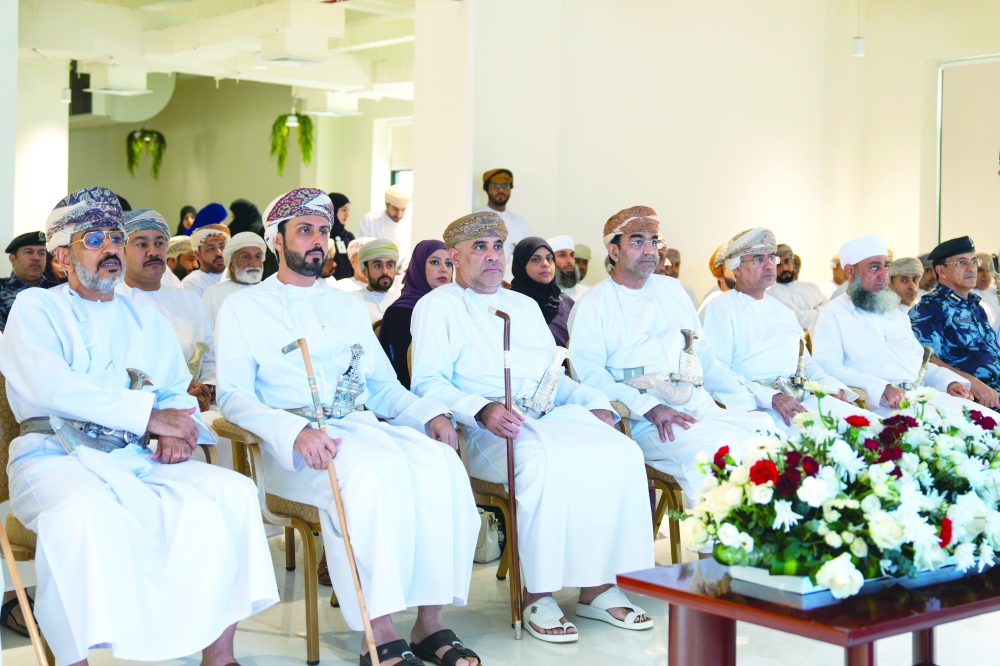
The event was held under the auspices of Dr Khalfan bin Said al Shueili, Minister of Housing and Urban Planning, and Tahir bin Mabkhout al Junaibi, Governor of Al Dhahirah, in the presence of senior officials and representatives from the public and private sectors.
The Ibri Structure Plan is a key component of the regional spatial strategy for Al Dhahirah Governorate, positioning Ibri as a central growth hub for the governorate. It provides a comprehensive spatial and investment framework to guide balanced urban expansion, regulate land use, and support demographic and economic growth in alignment with national priorities.
The plan sets out an ambitious vision to transform Ibri into a fully integrated regional city by diversifying its economic base and establishing specialised clusters in industry, agriculture, services and tourism. These sectors will be supported by advanced infrastructure and improved transport networks to enhance connectivity and service delivery.
It also emphasises sustainable resource management through the protection of land and water resources, modernisation of agricultural systems, and strategic use of cultural heritage and natural assets to boost investment appeal and quality of life.
Tahir bin Mabkhout al Junaibi, Governor of Al Dhahirah, described the launch as a turning point in Al Dhahirah Governorate’s development, noting that the plan lays a strong foundation for long-term growth driven by a clear strategic vision. He highlighted its integrated approach, combining economic, social and environmental dimensions to ensure balanced and efficient development.
He added that the plan strengthens Ibri’s readiness for future growth by enhancing infrastructure, improving services and diversifying economic activities, reinforcing its role as a dynamic economic centre.
Implementation will follow a coordinated institutional framework involving both government and private sector entities to accelerate project delivery and ensure alignment with broader development goals.
The plan aims to accommodate a population exceeding 121,000 by 2040, addressing challenges such as dispersed settlements, uneven growth and fragmented infrastructure. This will be achieved through structured urban expansion, revitalisation of the city centre and improvements to the urban landscape.
The plan is built around five core pillars:
Green Ibri: Increasing per capita open space to 9–10 sqm and developing parks along wadi corridors.
Connected Ibri: Establishing an integrated transport network, including 62 km of bus routes, while promoting public and active mobility.
Resilient Ibri: Developing walkable neighbourhoods, six new residential clusters and strengthening resilience to natural risks through wadi management.
Productive Ibri: Creating eight specialised economic clusters across key sectors while enhancing agricultural productivity and food security.
Distinctive Ibri: Preserving and activating cultural heritage to strengthen identity and support tourism.
The launch also unveiled a portfolio of over 190 development projects led by more than 30 public and private entities. The first phase includes over 100 projects spanning infrastructure, sustainable transport, energy, agriculture, industry, digital transformation and community services.
Key projects include the upgrade of Sultan Thuwaini Road, development of the industrial city, Ibri Uptown, Ibri Historic Centre, redevelopment of Ibri Souq, as well as a science and innovation centre and a regional park.
The plan reflects strong community engagement, with over 560 stakeholders and more than 35 entities participating through 90 workshops and specialised sessions, ensuring alignment with national and sectoral strategies.
The launch underscores a forward-looking vision to position Ibri as a competitive and sustainable urban hub, balancing economic growth with social and environmental priorities in line with Oman’s long-term development goals.
Oman Observer is now on the WhatsApp channel. Click here


